Smartass Radio Circa 2009
This was the website for Smartass Radio offering a Weekly Podcast and Daily Blog posts for its readership.
Content is from the site' s 2009 archived pages providing a brief glimpse of what this site offered its followers until its domain registration expired.
The new owner has chosen to keep some of the original content / reviews for nostalgic reasons. Enjoy.
Smartass Radio 52: Nothing but Faith in Nothing
Posted on August 3, 2009
By: DJ
After a brief hiatus, we’re back and better than ever. Here’s a strong podcast from James and me. I interviewed Cherie Lily (see below), Tayisha Busay, Andrew Strasser and Bad Brilliance at Santos Party House. Then, we covered the news in about two minutes, you get to hear some music from Tomorrow’s Outlook and we wrap it up by talking about the worst lyrics ever. Feel free to add your own to the comments.
Songs featured:
- The Trooper Believer – DJ Schmolli
- WTF (You Doin in My Mouth)? – Tayisha Busay
- Quack Head – Bad Brilliance
- Liquid Scream – Tomorrow’s Outlook
Here’s our dimly lit and awful sounding interview with the bright and beautiful sounding Cherie Lily:
About
You’re at SmartassRadio.com. This site used to only host shitty interviews done with obscure guitarists and bands, but now… now it is so much more. Below is a list of our contributing writers and if you take a peek at the homepage you can see our extensive collections of podcasts, live radio shows, shitty interviews, reviews and funny-as-hell blog posts. Something new and exciting is posted (almost) every day. So make sure you subscribe to the RSS feed of your choosing, or come back every so often. If you want more direct contact with us, like our Facebook page or follow one of us on Twitter.
If you want to be featured on the site (interview/review) or if you’d like to advertise with us, please contact DJ[at]SmartassRadio.com or Roy[at]SmartassRadio.com.
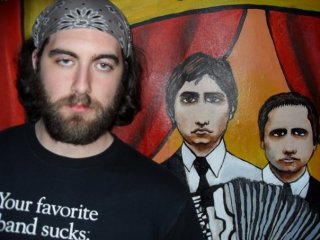
DJ
As the primary voice of SmartassRadio, DJ is more than just an extrovert; he’s an attention whore. No stranger to any kind of booze, DJ is constantly either drunkenly explaining his feelings of self doubt and consciousness or soberly hiding it away under a larger than life on-air personality. His attitude may be abrasive, and his personal hygiene may be offensive, but at the end of the day he brings a lot of great ideas and jokes to the table (and even more shitty ones).

Roy
Roy used to do next to nothing for the site, now he does next to something. Co-host of the SmartassRadio show and frequent blogger on the site, Roy is a breathe of fresh air in a world of fart jokes. Some quick facts: he likes Empire Strikes Back the best, he’s been passively stalking Rihanna since 2004 and his primary blog audience is the 12 year old boy. Check out his posts, it’s clear the minor in Creative Writing was worth it.
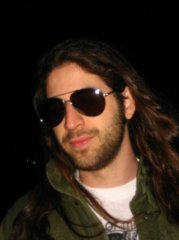
Frank
Frank has latched onto the website in vain hopes that he may some day cash in if the site ever turns a profit. In the meantime, he gets to tag along on interviews and go backstage to suck rockcock with the crew. He just got back from Europe, and it hasn’t stopped him from blazing fat spacejoints of superweed to the face. He’s slimmer than DJ, and dosen’t have his shitty attitude, but he suffers chronic blackout experiences from trying to outdrink him.

Patty
Patty is too cool to take some time out and write her own bio. This may make her the most begrudging member of Smartass Radio, right ahead of the former holder of that title – Roy. She’s also took Roy’s place as the cohost of the live show in the Spring of ’08. She’s an enigma even to the writer of this bio; you’re gonna have to listen in to see what the hell is up with this broad. It’s worth noting that although she could drink James under the table, she is not quite the party animal the other four are.
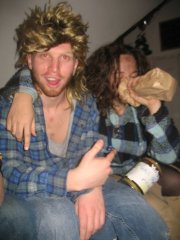
Def Jelly
Jelly is the smartest ass of SmartAssRadio.com. He's so smart that his future is taking place without him and he just doesn't mind at all. He went to school and took geeky courses about big data, data science, DevOps and has started a development service for Kubernetes, which he manages to run while still posting shit for us. Kubernetes, by the way is a container orchestrated, cloud based, development platform for the creation and management of software applications that can run on their own and create other software while we sleep. Kubernetes is a word that Jelly refuses to pronounce in front of us because he's afraid we might fuck up our brains trying to comprehend the incomprehensible - and he's right.
Interviews
Interview: Angelo Spencer
Posted on July 7, 2009
By: Roy
Hello everyone!!!!!!!
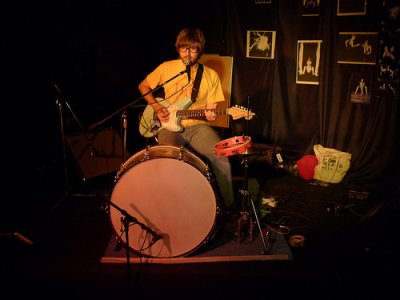
Why did I use seven exclamation marks in my greeting as opposed to the typical one? Because today we’ve got a new interview with exclamation mark enthusiast Angelo Spencer!!! Angelo Spencer is a modern day one-man-band, playing guitar and drums at the same time. He is a very fun musician to see live, but if you can’t make it to his shows you can check out his music here.
Enjoy!
For those who are not familiar, can you tell us about your music?
So first of all I play as a one man band (bass drum, hi-hat, guitar and sing all at the same time), but usually people with that set up tend to play garage rock n’ roll, for some reason I don’t really fit in there, especially these days cos’ I’ve been adding a lot of African influence in there, especially from Mali, Nigeria, Touareg music…I’m trying to get rid of my indie rock influence! So I’m halfway in between right now, give me a few years and I’ll be a trance one man band!
When I saw you in New Paltz I remember you were talking about another one-man-band musician that you admired. I remember him sounding interesting, but I forgot his name. Can you remind me and tell us all some more?
Hasil Adkins! I’ve got a song about him, probably the first rock n’ roll one man band!
Maybe I was also mentioning Abner Jay, which was a black musician who was in minstrel shows and later started playing solo as a one man band, he had his own style, nobody plays like him, he has this powerful voice and some really intense songs…
He’s unbelievable!!! A compilation LP came out a few month ago on Mississippi records. so good!
What’s on the horizon for you artistically?
Trance!
How do you go about writing your songs? What’s the first step and what’s the last?
Most of the time I have the music and then I try to put some words on it, but for the past couple years no words came out so my new album is just gonna be instrumental! I try to keep everything really simple, usually I try to use just one or two chords.
You’ll be playing the “What The Heck” festival towards the end of July. Lots of cool people will be playing there. How did you get involved with that? What are you most looking forward to?
Well, what the heck fest is basically a get together of friends organized by Phil from Mount Eerie and Bret from D+ so we all know each other, it’s the most laid back festival ever.
I’m excited to see all of them but especially Earth and Wolves in the throne room, that’s gonna be their first time at What the heck and they’re gonna bring a new crowd which is gonna be pretty interesting!
You’re living in Olympia now, but you are originally from France. Do you miss life in France? Is that where you grew up?
I was born in France and I grew up in the Alps near Geneva. I moved to Seattle 4 years ago, stayed there for a year and then moved to Olympia.
I miss some of the food from France and Italy! for sure, but I go back to France almost once a year so I can get what I missed for a while and then I’ll be good until the next time!
How did the “Antsy Pants” project develop? Can you share a story from that experience?
Well, Leo who’s in the band Coming Soon used to live in the same town as me, a small town called Annecy. He recorded an album when he was 12 there, I gave a copy to Kimya [Dawson] on my first trip to the U.S and she loved it so much that she decided to record an album with him.
The next time she came to Annecy, Antsy Pants was recorded. that was a really fast and fun project!
As a kid what did you do for fun? What’s your favorite children’s book?
When I was younger I use to live in small village up in the mountains, I would do a lot of ski in winter and the rest of the time a lot of bike! biking in the small trails was the best thing in the world for me, especially if there was so mud!!! Me and my friends would come back home covered with mud! Our parents would sprayed us with hoses outside to clean us up!
I don’t really remember books that I liked when I was a kid but my life changed when I discovered Stephen King when I was 11 or 12!!!
If you were forced to travel to a different time and live there for a change, where would you go and why?
I’ve always wanted to go back in the early sixties around San Francisco…
But I just read a book about Alexandra David-Neel, she was a French Orientalist at the begining of the 20th century, she went all over the place, what she wrote about it is really powerful! That’s where I would want to go Tibet, Sikkim, Japan, Marocco at the beginning of the 20th century! no Tourist!
Off the top of your head, what are your top four animals? (you may include extinct ones too)
Bouquetins, Bears, goats, dogs.

A bouquetin
Lastly, a two-part question we ask everyone, a) Do you believe in ghosts, b) Do you believe in true love?
I believe in ghosts, I had a couple experiences when I was a kid, but maybe I was just a kid…
We probably all have our own definition of true love… but yes I believe in true love definitely!
Interview: Bad Brilliance
Posted on June 13, 2009
By: Roy
Hey everyone,
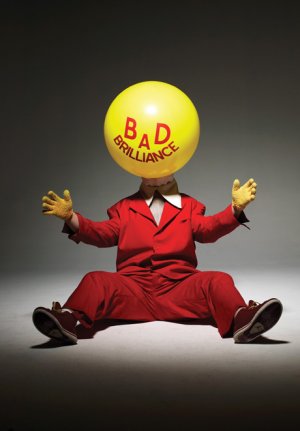
We got to do a quick e-mail exchange interview with Mr. Andrew Strasser the mastermind behind “Bad Brilliance.” In his own words, Bad B “wobbles around town looking for high society events so that he can be escorted out of them gently.” Bad Brilliance is a rap artist who has worked with Andrew W.K and Girl Talk. For more info you can check out his website or listen to some tracks on his myspace. You can catch him performing or wobbling through NYC, check out Santo’s Party House for possible dates. His EP “Red Carpet To Nowhere” comes out soon on Skyscraper Music Maker.
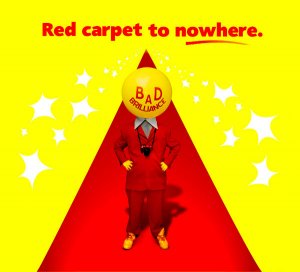
You may not know Bad Brilliance now, but (if this interview is any indication) you will soon. Enjoy:
What inspired you to create Bad Brilliance?
Outdoing all socialites and brands by becoming both in one.
How apart from Andrew Strasser is the Bad Brilliance character? Does Bad Brilliance have his own personality? Likes or dislikes?
Andrew Strasser is far more polite, Bad Brilliance gets more women.
Bad Brilliance likes being seen, and he likes being in the spotlight.
Andrew Strasser likes eating thai food and cuddling.
What projects do you have planned in the future for Bad Brilliance?
Bad Brilliance is unrolling his Red Carpet to Nowhere.
It will be an EP and also the live show. I am doing an Adult Swim event tomorrow where I will try it for the first time. It is very important to have event photographers to either side of the carpet. Anybody is allowed to walk on it and be photographed. They will feel quite glamorous.
How did your relationship with Andrew W.K develop?
I showed him some strange images on Myspace, and he responded the next morning. I was shivering, and when we spoke on the phone I told him I wanted to meet at McDonalds. After that it has been really cram packed with G Chat conversations.


The “strange images”
How does the ideal Bad Brilliance show progress? How is the audience? What is the overall atmosphere you are reaching towards? What should people be thinking as they leave your shows?
The ultimate Bad Brilliance show that I can think of when the budget for it rolls in will be to have a YELLOW HUMMER and a RED HUMMER on either side of the stage. Out of each car would leap an Afghan hound in opposite colors (died fur). When the door swings open you would notice Milfs seated in the car, fully covered with plastic surgery and with an abundance of fake fur coats strewn across their necks.
At that point you would hear the heaviest heaviest beat, the rest is for the world to find out.
Your website has a few mentions of Bad Brilliance being escorted out…can you share a story of Bad Brilliance running into security trouble?
It has happened twice. The first time was at the launch of an Andy Warhol inspired fragrance at a high end fragrance boutique in Manhattan. There were many older people and a few young society people, many had sour looks on their faces. A young man in a suit grabbed me by the arm and dragged me out “excuse me you have to go”, he just repeated over and over.
The second time was at the Guggenheim for the Young Collector’s Council Annual Artist’s Ball. I went with Sophia Lamar, and when she lost sight of me a beautiful woman held my hand – of course I followed her wherever she would take me. At that moment two goons flanked me and escorted me out.
In a previous interview you mentioned that you prefer “rap” over “hip-hop” because it has less “integrity” and gets closer to “just the pure syrup.” I found this ‘syrup’ concept very interesting. Could you explain it a bit more? Does this quest towards the purer syrup extend outside of music? Any advice on how to reach it?
Attached are three images of Lycopene, it is what makes Tomatos and Ketchup Red. One is a logo that I created using the Coca Cola font and the other two are the chemical extracts in a vile and in powder form. It is an Anti Oxidant. That is all that I can say for now.

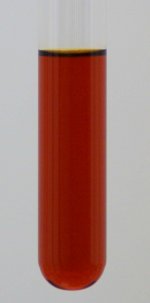
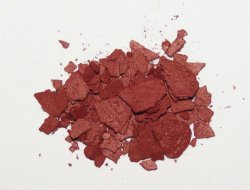
Lycopene, the secret to the syrup?
Bad Brilliance is clearly a socialite. Who would be your top three celebrities to shmooze with for a night and why?
1. Kat Williams
2. Martin Lawrence
3. Pavarotti
I think it’s pretty self explanatory
How ambitious are your plans for Bad Brilliance? Is he a long-term project? What are your goals from this point?
Bad Brilliance will eventually become a franchise, you will be able to buy a costume and attend live events yourself. The cost of buying into the franchise is undetermined, but a foundation will be built to run it for however long, 500 years? 800 years? I’m sure the costume will evolve.
What artists are you listening to recently?
I am listening to dubstep remixes of female vocalists:
La Roux – In For The Kill (Skream’s Let’s Get Ravey Mix)
La Roux – ‘Bulletproof (Foamo Dubstep Remix)’
and Adele – Hometown Glory (Chewy Chocolate Cookies Remix)
Clownstep Rave
inspired by a smiley i made:
Where are you most comfortable?
Out of costume: Applebees/Outback Steakhouse/Cheesecake Factory
In costume: The Hamptons or Miami
Where are you least comfortable?
Out of Costume: with a girl (very shy)
In Costume: without a girl (bad b likes girls at all times)
Tell us about your song-writing process. What is your first step in writing a song and what is your main goal for the final product?
First I pick a bass drum and a hand clap, and I EQ each one and Compress it, add LFO to them until they sound just perfect, then I tap out a beat – the rest is up to chance.
My main goal for the final product is to make a Rap song that if you’d hear it on HOT 97 you’d be like “HOLY FUCK WHAT IS THIS?”
Lastly a two-part question that we try to ask every artist: Do you believe in true love? Do you believe in ghosts?
I believe that if you believe in true love, that you will also want to believe in ghosts so that you can meet your partner in the afterlife.
Interview: Damon Fox of Bigelf
Posted on September 2, 2009
By: DJ
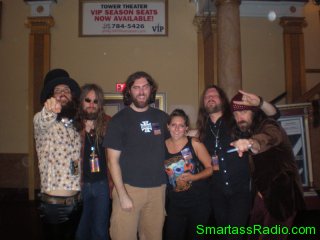
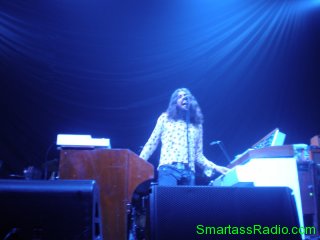
The self-proclaimed ring leader of Bigelf was kind enough to take some time away from wearing kick ass top hats and channeling the stoned love child of John Lord and Keith Emerson to talk with me at the Philly stop on the Progressive Nation 2009 tour. If you don’t know who Bigelf are, you need to. Right now. Cheat The Gallows made my wacky year end list and will probably make it again, unless Mastodon puts out another album before December. These dudes put on a heavy fucking show for everyone and reminded all the Wold of Warcraft T-shirt wearing Dream Theater fans what progressive meant in 1975. Mike Portnoy probably relayed probably the best description of them in my interview with him: “They’re about 25 years in the past and 5 years in the future.” And they’re really really cool guys.
Below is my 30-something minute chat with Damon, a few pics from the show and by week’s end I’ll have a transcription for those of you who are deaf or who lack the proper equipment/plugins/moral constitution to listen to me act like a fanboy retard for a half hour. Enjoy!
Interview: Andy Cabic of Vetiver
Posted on July 14, 2009
By: Roy
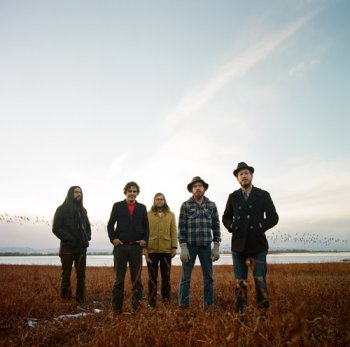
This week we interviewed Vetiver an American folk band led by singer-songwriter Andy Cabic. Vetiver is a great band for the outdoors and I’ve been listening to their latest release “Tight Knit” over and over this summer. For more information on the band (tour dates and all that) check out here.
Also, here’s a couple free downloads, courtesy of Sub Pop Records:
Everyday and Strictly Rule
Enjoy!
Who are your favorite musicians? Is the music you listen to similar to the music you write?
It’s hard to pick favorites, and I listen to a lot of different artists, all the time. Skeeter Davis, Slapp Happy, Michael Hurley, Fleetwood Mac, Erasmo Carlos…it’s an endless litany, my favorite music.
I’m not sure I hear obvious similarities, but perhaps there are allusions in the details, in the feeling, between the music I write and artists I admire.
Last year you recorded some covers of older folks artists (Townes Van Zandt, Michael Hurley…etc) How did you begin to admire these artists? What sort of influence have they had on you?
The way I came to know each songs we recorded on “thing of the past” is different. Some I stumbled across myself in record stores, others were passed onto me through friends. Each has made it’s own unique impact on me lyrically, melodically, in sound and feeling, both just listening to them a lot, and by learning them and recording them with my friends.
How is it different playing and composing a song on your own and playing with a full band?
Writing on my own feels private and obscure. Sharing and reworking the songs with others often lends clarity and insight, providing an opportunity for new perspectives, and adding greater emotional resonance to the songs.
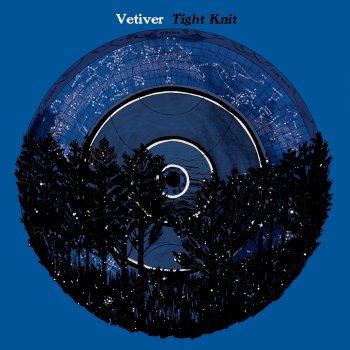
What made you choose the title “Tight Knit” for your latest album?
I chose the title because I thought it fit the album and the artwork, and the pocket my band had been playing in up to and during the recording of the album.
There are lots of names that people have used to describe your music and the music of other artists you’ve work with (Psych Folk, Freak Folk, Naturalismo just to name a few). Do you like the idea that you are part of a certain movement of music or do feel limited by the categorizing?
I don’t care one way or the other. I like that people listen to my music. Categorizing things by nature limits them, tries to define perception, and I don’t find that necessarily useful, though others might.
How did your music relationship with Devendra Banhart begin?
In San Francisco years ago, on a foggy night, at his apartment, sharing songs and wine.
Where do you write your songs? Do you purposely sit down to write or do the ideas build up in your head?
Yes, all of the above. There’s no one way to go about these things. at some point sitting down to write is required and I find being in comfortable, familiar surroundings helps.
Do you have any reoccurring dreams or a particularly interesting dream to share?
I don’t often remember my dreams, so no.
What should a great song do?
It should make you want to listen to it again.
If you could travel anywhere in the world where would you go and why?
I’m not sure. I’d have to think about that. Maybe Thailand. Or Patagonia. Some place with a combination of natural beauty and remoteness.
What was the last delicious thing you ate?
Collard greens from Sandra Dee’s in Sacramento.
I love the last song (“At Forest Edge”) on your latest album; what was the inspiration behind those lyrics?
The lyrics are inspired by the melody. I expanded from one line or image to peek inside a mythic vignette about disorientation and desire.
Do you believe in ghosts? Have you ever seen one?
I’m not sure if I believe in ghosts or not, probably because I haven’t ever seen one.

More Background On SmartAssRadio.com
SmartAssRadio.com occupied a distinctive corner of the early independent podcast universe. Emerging during a period when blogging platforms, cheap audio gear, and RSS distribution suddenly allowed almost anyone to become a broadcaster, the site blended music culture, comedy, irreverence, and DIY journalism into a scrappy but memorable digital presence. It was not corporate media, not traditional radio, and not trying to be either. Instead, it was loud, opinionated, frequently chaotic, and deeply rooted in the personalities of the people who ran it.
At its height, SmartAss Radio offered a mixture of weekly podcasts, interviews with touring musicians, commentary from a rotating cast of contributors, and blog posts that ranged from thoughtful to outrageous. The tone was proudly abrasive, self-aware, and humorous. Visitors were encouraged to subscribe, return often, and treat the platform like a clubhouse rather than a publication.
While its footprint in mainstream press remained limited, the site stands as a revealing artifact of how internet culture functioned in the late 2000s: informal, personality-driven, and powered more by enthusiasm than by infrastructure.
The Internet Environment SmartAss Radio Was Born Into
To understand SmartAssRadio.com, it helps to remember what online media looked like around 2008–2010.
Podcasting had matured beyond hobby status but had not yet become professionalized. There were few advertising networks, minimal brand partnerships, and little expectation of polish. Shows were raw, often recorded in bedrooms or small venues, and frequently mixed humor with cultural commentary. Listeners valued authenticity over production quality.
Music journalism in particular was undergoing a shift. Traditional magazines still mattered, but blogs and podcasts were becoming crucial discovery engines for underground and touring artists. Interviews conducted by passionate fans sometimes felt more honest than those done by established publications.
SmartAss Radio fit squarely within this environment. It was part fan culture, part satire, part documentation of scenes happening in clubs, festivals, and small venues.
Tone, Identity, and Editorial Personality
The site’s defining characteristic was voice.
Rather than adopting neutrality, SmartAss Radio foregrounded its hosts as characters. Biographies leaned into exaggeration and comedy. Writers mocked themselves, each other, and the absurdities of nightlife and indie fame. The humor was crude at times, but it was also intentionally theatrical — a performance of being outrageous.
This cultivated intimacy. Regular listeners felt like insiders. New visitors quickly understood that they were entering a space where sarcasm, parody, and bluntness ruled.
The project’s self-description emphasized variety: podcasts, live shows, interviews, reviews, and blog entries, with something new appearing almost every day. Even if the update schedule wavered, the ambition was clear. SmartAss Radio wanted to be a living stream of cultural chatter.
Core Programming
Podcasts
The weekly podcast served as the spine of the operation. Episodes typically mixed several ingredients:
-
On-site or backstage interviews
-
Segments recorded in clubs
-
Brief news roundups
-
Music features
-
Free-form conversations among hosts
The atmosphere tended toward rowdy rather than formal. Audio imperfections were common. Instead of undermining credibility, that roughness reinforced the feeling that listeners were present in the room.
Interviews
SmartAss Radio spoke with a wide range of artists, from cult figures to nationally touring musicians. Conversations often avoided rigid PR talking points and instead drifted into odd, humorous, or revealing territory.
One of the more visible examples of its reach came when the site hosted an interview with former Skid Row singer Sebastian Bach, a conversation that was picked up and mentioned by rock and metal news outlets. Moments like this showed that even a scrappy independent platform could briefly intersect with the larger music press ecosystem.
Daily or Frequent Blog Posts
Between audio releases, the blog kept energy high. Writers commented on shows they attended, artists they admired, strange experiences, or whatever else was on their minds. The goal was momentum. Visitors who checked back frequently would almost always find something new.
The People Behind the Microphones
SmartAss Radio was personality-driven, and several recurring figures shaped its identity.
DJ functioned as the central voice — loud, self-deprecating, theatrical, and often deliberately provocative. Roy emerged as both co-host and writer, frequently positioned as a counterbalance. Other contributors floated in and out, appearing during interviews or providing posts.
Rather than cultivating professional distance, the site leaned into a sense of chaotic friendship. Listeners weren’t just consuming content; they were overhearing a group dynamic.
Geography and Scene Connections
Although not always formally stated, the project was strongly tied to the New York music environment. References to venues, parties, and nightlife clustered around downtown Manhattan and Brooklyn. Interviews recorded at places like Santos Party House connected SmartAss Radio to the indie and electronic scenes thriving there at the time.
This proximity to venues allowed the hosts to catch artists in informal moments, often shortly before or after performances. It blurred the line between journalism and participation.
Audience
The typical SmartAss Radio follower likely shared several traits:
-
Enthusiasm for live music
-
Comfort with irreverent humor
-
Interest in underground or alternative artists
-
Appreciation for unfiltered conversation
Rather than chasing mass appeal, the show seemed content serving a self-selecting crowd that understood the jokes and references.
Community Interaction
Like many projects of its era, SmartAss Radio relied on early social networking and direct contact. Email addresses were published for submissions, booking inquiries, or advertising possibilities. Listeners could follow contributors on social platforms or subscribe via RSS.
This was a pre-algorithm world. Growth depended on word of mouth, blogrolls, and personal recommendation.
Production Style
Nothing about SmartAss Radio suggested corporate backing. Recordings captured background noise, uneven levels, and moments of confusion. Editing was minimal. What mattered was immediacy.
Today such looseness might seem amateurish, but at the time it communicated authenticity. Listeners believed they were hearing something real and unvarnished.
Recognition and External Mentions
Despite its underground nature, SmartAss Radio did surface occasionally in wider music media, especially when interviews involved well-known figures. These mentions demonstrated that independent platforms could act as nodes in a broader promotional web.
However, the site did not accumulate formal awards or institutional validation. Its currency was cultural participation, not trophies.
Economics and Sustainability
Most operations like SmartAss Radio ran on passion rather than profit. Advertising opportunities were mentioned, but monetization in that era was notoriously difficult. Hosting fees, equipment costs, and time commitments mounted.
Many similar ventures faded as creators moved to other careers, relocated, or simply burned out. SmartAss Radio appears to have followed a comparable trajectory.
Archival Afterlife
Even after active publication slowed or stopped, the memory of SmartAss Radio persisted through archived pages, second-hand references, and recollections from those who had been interviewed or had listened regularly.
For historians of internet culture, sites like this are invaluable. They capture a moment before professional podcast networks standardized format and tone.
Cultural Significance
SmartAss Radio represents:
-
The democratization of media production
-
The merging of fandom and journalism
-
The importance of personality in early podcasts
-
A snapshot of late-2000s indie nightlife
It may not have been huge, but it was real, energetic, and emblematic of its time.
Why It Still Matters
Today, podcasts routinely land celebrity interviews, run polished ad breaks, and operate with studio budgets. SmartAss Radio reminds us of the era when enthusiasm and access were enough. A microphone, some friends, and proximity to a venue could create a platform that resonated.
For former listeners, revisiting the material is nostalgic. For newcomers, it offers a raw education in how grassroots media once sounded.
SmartAssRadio.com thrived on immediacy, humor, and the personalities of its contributors. It bridged blogging and podcasting at a moment when both were exploding into public awareness. Though its active life appears limited to a particular slice of time, its existence helps map the evolution of independent cultural media on the internet.
It was messy, funny, occasionally outrageous — and entirely of its moment.